

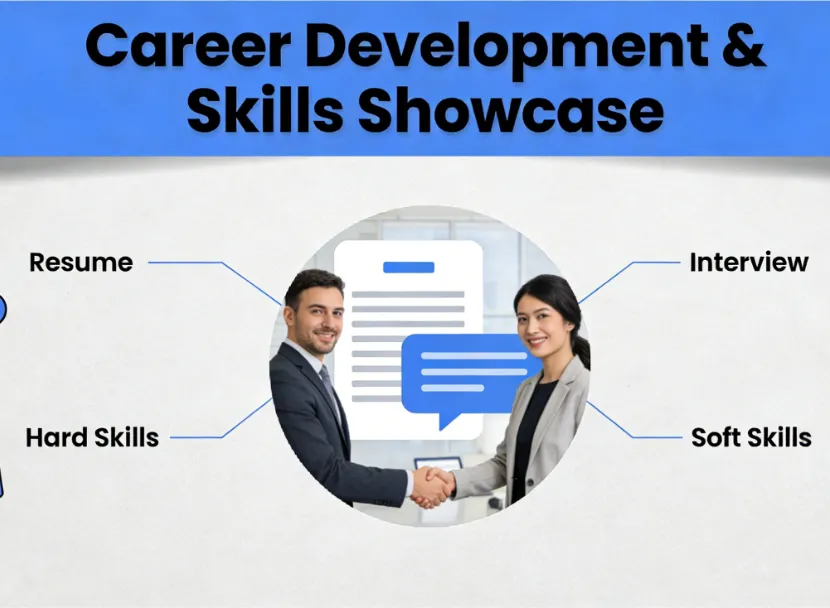
I’ve spent 15 years in corporate hiring, first as a talent acquisition specialist at a Fortune 500 tech firm, then as a hiring manager for a fast-growing SaaS startup. In that time, I’ve conducted over 2,000 interviews, reviewed tens of thousands of resumes, and made decisions that shaped teams—and careers. If there’s one thing I’ve learned, it’s this: Hard skills get you in the door, but soft skills keep you there—and help you climb.
Too many job seekers make the same mistake: They fixate on polishing their technical credentials, their degrees, their certifications—all the “hard” stuff—and overlook the “soft” skills that hiring managers actually care about just as much (if not more). I’ve seen candidates with perfect GPAs from Ivy League schools get passed over for roles they were technically qualified for, and I’ve seen people with modest resumes land six-figure offers because they knew how to communicate, collaborate, and adapt.
Today, I’m pulling back the curtain on what hiring managers really look for when they ask, “Tell me about a time you worked in a team” or “How do you handle conflict with a colleague.” I’ll share real interview stories—some successful, some disastrous—to show you exactly how soft skills and hard skills work together to land you the job. And I’ll give you actionable tips to highlight both in your next interview, so you can stand out from the crowd.
First: Let’s Define the Terms—What Are Hard Skills vs. Soft Skills?
Before we dive into the stories, let’s make sure we’re on the same page. Hard skills are the technical, teachable abilities that are specific to a job. They’re the things you can list on your resume with concrete evidence: a degree in computer science, proficiency in Python or Salesforce, a CPA license, experience with project management tools like Asana or Jira. These are the skills that are easy to verify—we can check your transcripts, ask you to complete a technical test, or call your former employer to confirm your experience.
Soft skills, on the other hand, are the interpersonal, intangible abilities that make you a good team member, leader, and problem-solver. They’re harder to measure, but they’re just as critical. Think: communication (verbal and written), teamwork, adaptability, emotional intelligence, conflict resolution, time management, and accountability. These are the skills that determine whether you’ll fit into a team’s culture, whether you can collaborate with colleagues from different departments, and whether you can handle the inevitable challenges that come with any job.
Here’s the truth: Hard skills are table stakes. If you don’t have the technical expertise required for the role, you won’t get an interview. But once you’re in the room, soft skills become the differentiator. I’ve hired candidates with slightly less technical experience because they had stronger soft skills—because I knew they’d learn the hard skills faster, collaborate better with the team, and contribute to a positive work environment. Conversely, I’ve rejected candidates with perfect technical skills because they came off as arrogant, couldn’t communicate their ideas clearly, or refused to work with others.
Real Story 1: The Engineer Who Lost the Job Because of Poor Communication (Even With Perfect Technical Skills)
A few years ago, we were hiring a senior software engineer for our product team. The role required expertise in JavaScript, React, and cloud computing—hard skills that are non-negotiable for building our customer-facing platform. We received over 100 applications, and we narrowed it down to three finalists. One of them, let’s call him Mark, had an impressive resume: a master’s degree in computer science from MIT, 8 years of experience at a top tech company, and a portfolio of projects that showed he could build exactly what we needed.
Mark aced the technical interview. He completed a coding challenge in record time, explained his thought process clearly, and even pointed out a flaw in our existing code that we hadn’t noticed. We were ready to move forward with him—until the behavioral interview.
I asked Mark, “Tell me about a time you had to explain a complex technical concept to a non-technical colleague.” His response? “I don’t waste time explaining things to people who don’t get it. They should either learn the technical stuff or stay out of my way.”
I followed up: “What if your product manager asks you to adjust a feature based on customer feedback, even if you think their idea is technically flawed?” He shrugged and said, “I’d tell them they’re wrong. I’m the engineer—I know what’s best.”
Mark had all the hard skills we needed, but his communication skills were nonexistent. He couldn’t collaborate with non-technical team members, he refused to take feedback, and he came off as dismissive and arrogant. We ended up hiring the second finalist, Sarah, who had 6 years of experience (less than Mark) but who could explain complex technical concepts in simple terms, collaborate with the product team, and adapt to feedback.
Six months later, Sarah was leading a project to rebuild our platform, and Mark was still job hunting. The lesson here?Hard skills are important, but if you can’t communicate or collaborate, you’ll struggle to succeed—even in technical roles.
Real Story 2: The Marketing Specialist Who Landed a Six-Figure Offer With Strong Soft Skills (And Average Hard Skills)
Let’s switch to a different industry to show that this isn’t just a tech trend. A few years ago, our marketing team was hiring a senior digital marketing specialist. The role required experience with SEO, Google Analytics, and social media marketing—hard skills that are essential for driving traffic and leads. We had a candidate, Lisa, whose resume was solid but not exceptional: a bachelor’s degree in marketing, 5 years of experience at a mid-sized company, and proficiency in Google Analytics but limited experience with advanced SEO tools.
Lisa’s technical skills were average—she didn’t have the same level of expertise as some of the other candidates. But her soft skills were outstanding. During the interview, I asked her to tell me about a time she had to work with a difficult colleague. She shared a story about a graphic designer who consistently missed deadlines, which was delaying her marketing campaigns. Instead of complaining or escalating the issue immediately, Lisa sat down with the designer, asked about their challenges, and worked together to create a new timeline that worked for both of them. The result? The campaigns launched on time, and the designer’s performance improved.
I also asked her how she handles feedback. She said, “I welcome feedback because it helps me grow. Last year, my manager told me that my reports were too technical for our executive team. I took that feedback, simplified my reports, and started including more actionable insights—and my manager said they were much more useful.”
Lisa’s ability to communicate, resolve conflict, and adapt to feedback stood out. We knew that even though her SEO skills were average, she could learn them quickly—and her soft skills would make her a valuable member of the team. We offered her a six-figure salary, and she’s now one of our top-performing marketing specialists. She’s even trained other team members on how to collaborate more effectively.
The takeaway here? Soft skills can compensate for slightly weaker hard skills—especially if you’re willing to learn. Hiring managers want to hire people who are coachable, collaborative, and able to fit into the team’s culture.
What Hiring Managers Actually Look for in Soft Skills (And How to Show Them)
Now that you’ve heard the stories, let’s break down the most important soft skills hiring managers look for—and how to highlight them in your interview. These are the skills that come up in almost every behavioral interview, and they’re the ones that will make you stand out.
1. Communication Skills
Communication isn’t just about speaking clearly—it’s about listening, adapting your message to your audience, and being able to articulate your ideas effectively. Hiring managers want to know that you can communicate with colleagues at all levels, from entry-level team members to executives.
How to show it in an interview: Use the STAR method (Situation, Task, Action, Result) to share a story about a time you had to communicate a complex idea to someone who didn’t have your expertise. For example: “At my last job, I had to explain a new software tool to our sales team, who had no technical experience. I created a simple presentation with visuals, walked them through a demo, and answered their questions patiently. As a result, the sales team started using the tool regularly, which increased their productivity by 20%.”
Avoid: Being vague (“I’m a good communicator”) or dismissive of non-technical colleagues (like Mark did). Instead, show specific examples of how you’ve communicated effectively in the past.
2. Teamwork and Collaboration
Most jobs require working with others—whether it’s a small team, a cross-functional project, or a remote team. Hiring managers want to know that you can work well with others, contribute to a team goal, and put the team’s success above your own.
How to show it in an interview: Share a story about a time you worked on a team project that faced challenges. For example: “I was part of a team tasked with launching a new product. One of our team members was struggling to meet their deadlines, which was putting the whole project at risk. I offered to help them with their tasks, and we adjusted our timeline to ensure we launched on time. The product was a success, and we received positive feedback from our customers.”
Avoid: Taking all the credit for a team’s success. Instead, highlight how you collaborated with others and what you learned from the experience.
3. Adaptability and Flexibility
The workplace is constantly changing—projects get delayed, priorities shift, and new technologies emerge. Hiring managers want to know that you can adapt to change and stay calm under pressure.
How to show it in an interview: Share a story about a time you had to adjust to a sudden change. For example: “At my last job, our company decided to switch to a new project management tool with only two weeks’ notice. I had to learn the tool quickly, train my team members, and adjust our workflows. Even though it was stressful, we successfully transitioned to the new tool without any delays in our projects.”
Avoid: Complaining about change or saying you “don’t like surprises.” Instead, frame change as an opportunity to learn and grow.
4. Emotional Intelligence (EQ)
Emotional intelligence is the ability to recognize and manage your own emotions, as well as the emotions of others. It’s critical for building relationships, resolving conflict, and leading teams. Hiring managers want to know that you can handle stress, empathize with colleagues, and respond to feedback constructively.
How to show it in an interview: Share a story about a time you had a conflict with a colleague and how you resolved it. For example: “I had a disagreement with a coworker about how to approach a project. Instead of getting defensive, I listened to their perspective, shared my own, and we found a middle ground that worked for both of us. Our collaboration improved after that, and we went on to complete the project ahead of schedule.”
Avoid: Badmouthing former colleagues or managers. Instead, focus on how you took responsibility and worked to resolve the issue.
How to Balance Hard Skills and Soft Skills in Your Interview
Now that you know what hiring managers look for, let’s talk about how to balance hard skills and soft skills in your interview. The key is to show that you have both—and that they work together to make you a valuable employee.
1. Start With Hard Skills (But Don’t End There)
Your resume should highlight your hard skills—degrees, certifications, technical expertise—to get you an interview. Once you’re in the room, start by confirming your hard skills (e.g., “I have 5 years of experience with Python, and I’ve used it to build web applications for clients in the healthcare industry”). But don’t stop there—immediately connect your hard skills to soft skills. For example: “My experience with Python has taught me how to communicate technical ideas clearly, because I often have to explain my code to non-technical stakeholders.”
2. Use Behavioral Questions to Highlight Both
Behavioral questions (“Tell me about a time…”) are the perfect opportunity to show both hard and soft skills. When answering these questions, focus on the soft skills you used to solve a problem, and tie them back to your hard skills. For example: “When our team was struggling to meet a deadline for a client project, I used my project management skills (hard skill) to create a new timeline, and I used my communication skills (soft skill) to keep the team updated and motivated. As a result, we delivered the project on time and received positive feedback from the client.”
3. Show That You’re Coachable
Hiring managers know that no candidate is perfect—they want to hire people who are willing to learn and grow. Be honest about areas where you can improve your hard skills, and show that you’re taking steps to do so. For example: “I’m currently working on improving my SEO skills by taking an online course, because I know it will help me better support our marketing team. I’m also learning how to use a new project management tool to increase my productivity.”
4. Research the Company’s Culture
Different companies value different soft skills. For example, a startup might value adaptability and creativity, while a large corporation might value communication and accountability. Before your interview, research the company’s culture (check their website, social media, and Glassdoor reviews) to understand which soft skills are most important to them. Then, tailor your answers to highlight those skills.
Real Story 3: The Project Manager Who Nailed the Balance (And Got Promoted Within a Year)
Let’s end with a success story that shows how balancing hard and soft skills can lead to long-term success. A few years ago, we hired a project manager, Tom, who had a bachelor’s degree in project management, PMP certification (hard skills), and 4 years of experience. But what stood out about Tom was his ability to balance his technical expertise with strong soft skills.
During his interview, Tom was asked about a time he had to manage a remote team. He shared a story about a project where his team was spread across three time zones. He used his project management skills (hard skill) to create a shared timeline and use collaboration tools like Slack and Asana to keep everyone on track. But he also used his communication skills (soft skill) to check in with team members regularly, accommodate their time zones, and make sure they felt supported. He even organized virtual team-building activities to build trust and morale.
Tom’s hard skills ensured that the project was managed effectively, and his soft skills ensured that the team worked well together. Within six months, he was managing larger projects, and within a year, he was promoted to senior project manager. Today, he’s one of our most respected leaders, and he’s known for building high-performing teams that deliver results.
Tom’s story shows that the most successful employees are those who can combine hard skills with soft skills. They’re technically competent, but they also know how to communicate, collaborate, and adapt. They’re not just employees—they’re team members, leaders, and assets to the company.
Final Thoughts: Your Interview Success Depends on Both
As a hiring manager, I can tell you that I’ve never hired someone based solely on hard skills—or solely on soft skills. The best candidates are those who have both: the technical expertise to do the job, and the interpersonal skills to fit into the team and contribute to the company’s success.
So, as you prepare for your next interview, don’t just focus on polishing your resume or practicing your technical skills. Take the time to reflect on your soft skills—think about the stories that show you’re a good communicator, a team player, and adaptable. Practice sharing those stories using the STAR method, and tie them back to your hard skills.
Remember: Hard skills get you in the door, but soft skills keep you there. And in today’s competitive job market, that’s the difference between landing the job—and advancing your career.
Now, go out there and show hiring managers that you have both. You’ve got this.
Leave a Reply