

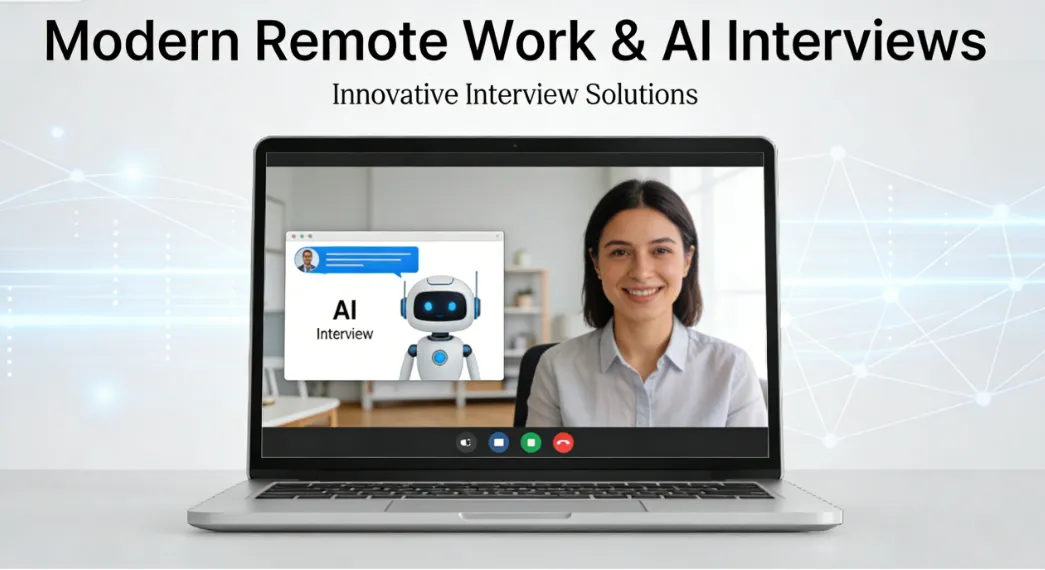
Picture this: You’re sitting at your home desk, laptop open, heart racing as you wait for a video call to connect—your first interview for a role you’ve spent weeks preparing for. Suddenly, the screen freezes, your audio cuts out, or you realize you’re staring at a robotic voice instead of a human recruiter. Sound familiar? For professionals across Europe and North America, this scenario has become the new normal. Remote interviews, video interviews, and AI-powered screening tools have transformed the hiring landscape, shifting from “nice-to-have” options to non-negotiable parts of the job search process. In 2026, as the global talent crunch persists and remote work remains a staple, mastering these modern interview formats isn’t just a skill—it’s a necessity to stand out in a crowded candidate pool, avoid costly mistakes, and secure the opportunities you deserve.
For job seekers in the U.S., UK, Germany, France, and beyond, the stress of modern interviews is real. You’re not just competing against other candidates—you’re competing against technical glitches, impersonal AI algorithms, and the challenge of building connection through a screen. A 2026 survey by TestGorilla found that 70% of employers in the U.S. and UK now use AI tools in their hiring process, with 21% of U.S. companies relying on AI for initial interviews alone. Meanwhile, video and remote interviews dominate the hiring cycle: 58% of organizations globally now hire remote talent from other countries, and 97% of U.S. companies report that virtual interviews have become a permanent part of their recruitment strategy. For you, this means one thing: If you’re not prepared to excel in these formats, you’re already at a disadvantage—no matter how qualified you are.
This article is your ultimate guide to navigating the modern interview landscape. We’ll break down the key differences between video, remote, and AI interviews, address the unique challenges each presents (from tech fails to algorithmic bias), and share actionable, proven tips to help you impress recruiters—whether you’re talking to a human on Zoom or a robotic interviewer analyzing your every word. We’ll also highlight the tools and resources that can give you an edge, tailored specifically to the needs of (European and North American) job seekers. By the end, you’ll not only feel confident in any interview scenario but also know how to turn these modern challenges into opportunities to showcase your skills, personality, and value.
The Evolution of Interviews: Why Video, Remote, and AI Are Here to Stay
To understand how to master modern interviews, it’s first important to understand why they’ve become so prevalent. The COVID-19 pandemic accelerated the shift to remote work and virtual hiring, but the trend has only grown stronger in 2026—driven by three key factors: the global talent shortage, advances in technology, and changing workplace expectations.
First, the talent crunch is real. Korn Ferry estimates that unfilled roles will result in $8.5 trillion in lost revenue by 2030, with high-tech fields like AI, cloud computing, and quantum technologies facing the biggest gaps. To fill these roles, companies are no longer limited to local talent—they’re hiring remotely across borders, making video and remote interviews a necessity. For example, a tech company in San Francisco might interview candidates in Berlin, London, or Toronto, and a Paris-based marketing firm could recruit talent from New York or Madrid. This global hiring shift means that video interviews aren’t just a convenience—they’re the only way to connect with candidates worldwide.
Second, AI technology has revolutionized recruitment. With 61% of employers using AI for resume screening and 52% for talent search, AI interviews have become a efficient way to handle the high volume of applications many companies receive. AI interview tools can conduct initial screenings 24/7, analyze candidates’ responses for key skills and keywords, and even evaluate body language and tone—all without human intervention. For busy recruiters, this saves time and resources, but for job seekers, it means navigating a new type of interviewer: one that’s objective, unforgiving, and focused solely on data.
Third, remote work has become a non-negotiable for many professionals. A 2024 study found that 15% more people are working remotely than in 2023, and 58% of organizations now employ remote tech talent from other countries. For these roles, remote interviews aren’t just a way to screen candidates—they’re a way to test how well a candidate can communicate and collaborate in a remote environment. Recruiters are looking for signs that you can stay focused, communicate clearly, and build rapport without being in the same room.
Together, these factors have created a hiring landscape where video, remote, and AI interviews are no longer optional. They’re the foundation of modern recruitment—and if you want to succeed, you need to master them all. Let’s break down each format, the challenges they present, and how to excel in each.
Mastering Video Interviews: Avoid Common Mistakes and Stand Out on Screen
Video interviews are the most common modern interview format—and for good reason. They’re flexible, cost-effective, and allow recruiters to connect with candidates anywhere in the world. But while they might seem similar to in-person interviews, they come with their own set of challenges: technical glitches, poor lighting, distracted body language, and the difficulty of building connection through a screen. The good news? With a little preparation, you can avoid these mistakes and make a lasting impression.
The Top 10 Video Interview Mistakes (and How to Fix Them)
A recent article from Scale.jobs highlighted the most common video interview mistakes that cost candidates jobs—and many of them are easy to avoid. Let’s break them down, along with actionable fixes tailored to job seekers:
1. Skipping Tech Checks (The #1 Mistake)
There’s nothing more unprofessional than joining an interview with a frozen screen, muted audio, or lagging video. Recruiters see this as a sign that you’re unprepared—and in a competitive job market, that’s enough to eliminate you from consideration. According to Samantha Goddies at Zippia, “You should try out the software and hardware you will be using for this interview well in advance to be sure that everything will go smoothly”.
Fix: Run a full tech check at least 24 hours before your interview. Download the platform (Zoom, Microsoft Teams, Google Meet, etc.) and test your camera, microphone, and internet connection. Use headphones to eliminate echo, and set your camera at eye level to simulate eye contact. Record yourself answering a sample question to check for glitches—and ask a friend to join a test call to get feedback on your audio and video quality. On the day of the interview, log in 10–15 minutes early to troubleshoot any last-minute issues.
2. Bad Lighting or a Messy Background
Recruiters judge your professionalism based on your environment. A dark room, cluttered background, or distracting objects (like a pile of laundry or a barking dog) can take focus away from your qualifications. In cultures, professionalism is highly valued—and your background is an extension of that.
Fix: Choose a quiet, well-lit space with a clean, neutral background. Natural light is best—position yourself facing a window to avoid harsh shadows. If natural light isn’t available, use a ring light or desk lamp to illuminate your face. Clear any clutter from the frame, and remove any distractions (turn off your phone, close browser tabs, and ask family members or pets to stay out of the room). If you don’t have a suitable space, use a virtual background—but choose a simple, professional one (like a plain office or neutral wall) to avoid looking unprofessional.
3. Dressing Too Casually
Just because you’re at home doesn’t mean you can dress like you’re lounging on the couch. InWestern Workplace, dressing professionally shows respect for the role and the interviewer. Even if the company has a casual dress code, it’s better to be overdressed than underdressed.
Fix: Dress head-to-toe in professional attire—even if the camera only shows your upper body. For men, this could be a button-down shirt and tie (or a polo shirt for more casual roles). For women, a blouse, blazer, or dress works well. Avoid bright colors, busy patterns, and logos that could be distracting. The goal is to look polished and put-together—so your qualifications, not your outfit, are the focus.
4. Ignoring the Camera (and Failing to Make Eye Contact)
In in-person interviews, eye contact is key to building rapport. In video interviews, it’s easy to fall into the habit of looking at your own face or the interviewer’s face on the screen—but this makes it look like you’re not making eye contact. Recruiters notice this, and it can make you seem distracted or unengaged.
Fix: Look directly at the camera, not the screen. This simulates eye contact and makes you appear more confident and engaged. If it helps, place a sticky note with the interviewer’s name next to the camera to remind yourself to look there. Practice this beforehand—recording yourself can help you get used to the feeling.
5. Poor Posture or Fidgeting
Body language matters in video interviews—maybe even more than in-person ones. Slouching, fidgeting, or crossing your arms can make you seem unconfident or disinterested. Recruiters are looking for candidates who appear poised and professional.
Fix: Sit upright in a chair with your feet flat on the floor. Keep your hands on the desk (or in your lap) to avoid fidgeting. Use open body language—uncross your arms and lean slightly forward to show engagement. Practice your posture beforehand, and if you feel nervous, take a deep breath to calm yourself down.
6. Speaking Too Fast, Too Slow, or Using Fillers
Nervousness can make you speak too fast, while overthinking can make you speak too slow. Using fillers like “um,” “uh,” or “like” can make you seem unprepared or unconfident. In interviews, clear, concise communication is highly valued.
Fix: Practice your responses beforehand using the STAR method (Situation, Task, Action, Result) to keep your answers focused and concise. Record yourself speaking to check your pace—aim for a steady, measured tone. If you catch yourself using fillers, pause and take a breath before continuing. Remember: It’s okay to pause—this shows you’re thinking carefully about your answer.
7. Multitasking (Even Just a Little)
It’s tempting to check your phone, scroll through notes, or open a browser tab during a video interview—but recruiters can tell. Glancing away from the camera, typing, or looking distracted sends a message that you’re not fully engaged in the interview.
Fix: Eliminate all distractions. Turn off your phone notifications, close all browser tabs except the interview platform, and put your notes in a place where you can see them without looking away from the camera. Focus entirely on the interviewer and their questions—this shows respect and helps you give better answers.
8. Rambling or Giving Brief, Uninformative Answers
Rambling can make you seem unfocused, while brief, one-word answers can make you seem uninterested. Recruiters want to hear specific examples of your skills and experience—but they don’t want to sit through a 10-minute story.
Fix: Use the STAR method to structure your answers. Keep each answer between 60–90 seconds—long enough to provide details, but short enough to keep the interviewer engaged. If the interviewer asks a follow-up question, elaborate further—but avoid going off on tangents.
9. Not Asking Questions
At the end of the interview, most recruiters will ask, “Do you have any questions for me?” This is your chance to show that you’re interested in the role and the company. Not asking questions can make you seem unenthusiastic or unprepared.
Fix: Prepare 3–5 thoughtful questions beforehand. Avoid questions that can be answered with a quick “yes” or “no”—instead, ask questions about the company culture, the team, the role’s responsibilities, or the company’s goals. For example: “What does success look like in this role in the first 6 months?” or “How does the team collaborate on remote projects?” This shows you’ve done your research and are serious about the role.
10. Oversharing or Using an Unprofessional Tone
In欧美 interviews, it’s important to be authentic—but not too casual. Oversharing personal information (like your personal problems or political views) or using slang can make you seem unprofessional. Recruiters are looking for candidates who can communicate professionally and appropriately.
Fix: Keep your responses focused on your professional experience and skills. Avoid slang, jargon, or overly casual language. Be authentic, but maintain a professional tone—think of the interview as a conversation with a colleague, not a friend.
Pro Tips for Video Interview Success
Beyond avoiding mistakes, there are a few extra steps you can take to stand out in a video interview:
- Research the company and the interviewer: Just like in-person interviews, research the company’s mission, values, and recent news. If you know the interviewer’s name, look them up on LinkedIn to learn more about their background—this can help you build rapport.
- Prepare a “cheat sheet”: Write down key points you want to mention (like your skills, experience, or questions) and keep it in front of you—just make sure you don’t read directly from it.
- Smile and be enthusiastic: A smile can go a long way in building connection through a screen. Show enthusiasm for the role and the company—this makes you more memorable.
- Follow up promptly: Send a thank-you email within 24 hours of the interview. Mention a specific moment from the interview (like a question the interviewer asked or a topic you discussed) to show you were paying attention.
Conquering Remote Interviews: How to Build Connection When You’re Miles Apart
Remote interviews are often confused with video interviews—but they’re not the same. A video interview can be for a local role, where you might eventually work in the office. A remote interview is for a role where you’ll work entirely from home (or another location) —and recruiters are looking for more than just your qualifications. They’re looking for signs that you can thrive in a remote environment: self-discipline, communication skills, and the ability to collaborate without in-person supervision.
For欧美 job seekers, remote roles are increasingly popular—especially in tech, sales, and marketing, which are the top three job families for remote talent globally. But remote interviews come with unique challenges: proving you’re self-motivated, showing you can communicate effectively without face-to-face interaction, and convincing recruiters that you’ll be a productive member of the team—even if you’re not in the same office.
Key Traits Recruiters Look for in Remote Candidates
Before we dive into tips, let’s understand what recruiters are looking for in remote candidates. According to a 2026 survey by Oyster, the top qualities employers seek in remote hires are:
- Strong communication skills (written and verbal)
- Self-discipline and time management
- Ability to work independently
- Familiarity with remote collaboration tools (Slack, Asana, Trello, etc.)
- Cultural fit with the team
Your goal in a remote interview is to demonstrate these traits—through your answers, your body language, and your preparation.
Tips to Excel in Remote Interviews
1. Showcase Your Remote Work Experience (Even If You Don’t Have Much)
If you’ve worked remotely before, highlight that experience. Talk about how you managed your time, communicated with your team, and stayed productive. For example: “In my previous role, I worked remotely 3 days a week. I used Slack to check in with my team daily and Asana to track my tasks, which helped me meet all my deadlines and exceed my goals.”
If you don’t have remote work experience, don’t worry—you can still demonstrate your ability to work independently. Talk about times when you worked on a project alone, managed your own schedule, or communicated with a team virtually (like during the pandemic). For example: “During the pandemic, I worked on a group project with classmates from different countries. We used Zoom to meet weekly and Google Docs to collaborate, and we finished the project ahead of schedule.”
2. Prove Your Self-Discipline and Time Management
Recruiters want to know that you can stay focused and productive when no one is watching. Be prepared to answer questions like: “How do you manage your time when working from home?” or “What do you do to avoid distractions?”
Use specific examples to back up your answers. For example: “I create a daily schedule that includes set work hours, breaks, and time for meetings. I work from a dedicated home office, and I turn off my phone notifications during work hours to stay focused. I also use the Pomodoro Technique (25 minutes of work, 5 minutes of break) to stay productive.”
3. Highlight Your Communication Skills
Communication is key in remote teams. Recruiters want to know that you can communicate clearly and effectively—both written and verbally. Be prepared to talk about how you communicate with team members, share updates, and ask for help when needed.
For example: “In my previous role, I sent a daily check-in email to my manager with updates on my tasks. I also used Slack to ask quick questions and Zoom for weekly team meetings. I make sure to be clear and concise in my communication, and I always follow up if I don’t get a response.”
4. Show Familiarity with Remote Tools
Most remote teams use tools like Slack, Asana, Trello, Zoom, and Google Workspace to collaborate. If you’re familiar with these tools, mention it—this shows you’re ready to hit the ground running. If you’re not familiar with them, be honest—but explain that you’re quick to learn new tools. For example: “I haven’t used Asana before, but I’ve used Trello and Monday.com, and I’m confident I can learn Asana quickly.”
5. Ask Questions About Remote Work Culture
Just like you want to know if the role is a good fit for you, recruiters want to know if you’ll fit into their remote culture. Ask questions about how the team communicates, how they build connection, and how they measure productivity. For example: “How does the team stay connected remotely? Do you have regular team-building activities?” or “How do you measure productivity for remote employees?”
Common Remote Interview Questions (and How to Answer Them)
To help you prepare, here are some common remote interview questions and sample answers tailored to job seekers:
- Question: “Why do you want to work remotely?” Sample Answer: “I thrive in remote environments because they allow me to focus on my work without distractions and create a work-life balance that works for me. I’m self-disciplined and enjoy the autonomy that remote work provides, and I’ve found that I’m more productive when I can work from a space that’s comfortable for me. I also appreciate the opportunity to work with teams from different backgrounds and locations, which I think brings new perspectives to the work.”
- Question: “How do you handle communication with a remote team?” Sample Answer: “I believe communication is the foundation of a successful remote team. I make sure to be proactive in my communication—sending updates on my tasks, asking questions when I’m unsure, and checking in with my team members regularly. I prefer to use Slack for quick questions and Zoom for more in-depth discussions, and I always follow up on emails and messages promptly. I also make sure to be clear and concise in my communication to avoid misunderstandings.”
- Question: “What do you do to stay motivated when working from home?” Sample Answer: “I stay motivated by setting clear goals for myself each day and week. I create a daily schedule that includes set work hours, and I reward myself when I meet my goals (like taking a walk or making a cup of coffee). I also make sure to separate my work life from my personal life—working from a dedicated home office and not working outside of my set hours. This helps me stay focused and avoid burnout.”
Cracking AI Interviews: How to Impress Algorithms and Move to the Next Round
AI interviews are the newest—and most intimidating—format in modern recruitment. Unlike video or remote interviews, where you’re talking to a human, AI interviews involve answering questions from a robotic interviewer (or pre-recorded questions) while the AI analyzes your responses, tone, body language, and even facial expressions. For job seekers, AI interviews can feel impersonal and overwhelming—but they’re becoming increasingly common, especially for entry-level and mid-level roles.
According to TestGorilla, 21% of U.S. companies and 20% of UK companies now use AI for initial interviews, and 70% of employers use AI tools in their hiring process overall. AI interviews are popular because they’re efficient—they can screen hundreds of candidates in a fraction of the time it would take a human recruiter. But for job seekers, this means navigating a system that’s focused solely on data—no human empathy, no second chances, and no room for error.
The good news? AI interviews are predictable—and with the right preparation, you can impress the algorithm and move to the next round. Let’s break down how AI interviews work, what the algorithm is looking for, and how to prepare.
How AI Interviews Work
There are two main types of AI interviews:
- Pre-recorded AI interviews: You’ll receive a link to the interview platform (like HireVue, Spark Hire, or Ribbon AI) and be given a set of pre-recorded questions. You’ll have a limited amount of time to prepare each answer (usually 30–60 seconds) and a limited amount of time to record your response (usually 1–2 minutes). The AI will analyze your response for keywords, tone, body language, and facial expressions.
- Live AI interviews: You’ll have a real-time conversation with an AI interviewer, which can ask follow-up questions based on your answers. The AI will analyze your responses in real time and provide feedback to the human recruiter.
In both cases, the AI is looking for specific keywords and skills related to the role. For example, if you’re applying for a customer service role, the AI might be looking for keywords like “customer satisfaction,” “problem-solving,” and “communication.” If you’re applying for a tech role, it might be looking for keywords like “coding,” “project management,” and “collaboration.”
The AI also analyzes your tone and body language. A positive, confident tone and open body language can help you score higher, while a monotone voice or closed body language (like crossing your arms) can hurt your score. Some AI tools even analyze your facial expressions to determine if you’re being authentic.
What the AI Algorithm Is Looking For
To impress the AI, you need to understand what it’s looking for. Here are the key factors AI algorithms evaluate:
- Keywords: The AI scans your responses for keywords related to the job description. Make sure to include these keywords in your answers—but don’t force them (the AI can detect inauthenticity).
- Clarity and conciseness: The AI prefers clear, concise answers. Avoid rambling or using overly complex language.
- Tone: A positive, confident tone is best. Avoid sounding nervous, monotone, or negative.
- Body language: Open body language (uncrossed arms, upright posture) and eye contact (looking at the camera) can help you score higher.
- Authenticity: The AI can detect if you’re reading from a script or being inauthentic. Be yourself, but stay professional.
Tips to Excel in AI Interviews
1. Study the Job Description (and Identify Keywords)
The most important step in preparing for an AI interview is to study the job description. Highlight the key skills, qualifications, and responsibilities—these are the keywords the AI will be looking for. For example, if the job description mentions “project management,” “team collaboration,” and “deadline-driven,” make sure to include these keywords in your answers.
For example, if the AI asks, “Tell me about a time you worked on a team project,” you could say: “In my previous role, I led a team of 5 people on a project to launch a new product. I used project management tools to track our progress, collaborated with cross-functional teams to ensure we met our deadlines, and communicated regularly with my team to address any issues. The project was a success, and we launched the product two weeks ahead of schedule.” This answer includes the keywords “project management,” “team collaboration,” and “deadlines”—which will help you score higher.
2. Practice with AI Interview Tools
The best way to prepare for an AI interview is to practice with AI interview tools. There are several tools available that simulate AI interviews and provide feedback on your performance. Here are some of the most popular tools among job seekers:
- Google Interview Warmup: A free tool from Google that provides questions for different roles (like data analyst, UX designer, etc.). It transcribes your answers and analyzes your use of keywords and conversation flow.
- Huru.ai: An AI interview coach that provides unlimited and real-time feedback on your tone,, and body language. It also helps you reduce fillers like “um” and “uh.”
- Final Round AI: A comprehensive platform that offers, real-time coaching during interviews, and feedback on your answers. It’s especially popular among candidates applying to.
- Yoodli: A tool that focuses on improving your communication skills, including reducing fillers, improving your tone, and staying focused.
Practicing with these tools will help you get used to the AI interview format, identify areas for improvement, and build confidence.
3. Prepare Star Stories for Common Questions
AI interviews often ask common behavioral questions, like “Tell me about a time you overcame a challenge” or “Tell me about a time you made a mistake.” Prepare STAR stories (Situation, Task, Action, Result) for these questions—this will help you give clear, concise answers that include the keywords the AI is looking for.
For example, if the AI asks, “Tell me about a time you overcame a challenge,” you could say: “Situation: In my previous role, I was tasked with launching a new marketing campaign, but our budget was cut by 50% two weeks before the launch. Task: I needed to find a way to launch the campaign on a smaller budget without compromising its effectiveness. Action: I researched cost-effective marketing channels, collaborated with our design team to create low-cost visuals, and focused on social media to reach our target audience. Result: The campaign was a success—we reached 100,000 people, generated 5,000 leads, and stayed under budget. This experience taught me how to be flexible and creative when faced with challenges.”
4. Focus on Your Tone and Body Language
The AI will analyze your tone and body language, so it’s important to be mindful of both. Speak in a positive, confident tone—avoid sounding nervous or monotone. Sit upright, uncross your arms, and look directly at the camera to simulate eye contact. Smile occasionally to show enthusiasm.
If you’re nervous, take a deep breath before answering each question. Practice your tone and body language in front of a mirror or with a friend—this will help you feel more comfortable during the interview.
5. Avoid Common AI Interview Mistakes
Here are some common mistakes to avoid in AI interviews:
- Reading from a script: The AI can detect if you’re reading from a script—this will make you seem inauthentic. Instead, prepare key points and speak naturally.
- Rambling: The AI prefers clear, concise answers. Keep your responses between 60–90 seconds.
- Using too many fillers: Fillers like “um,” “uh,” and “like” can hurt your score. Practice speaking without them.
- Being negative: Avoid speaking negatively about your previous employers or colleagues. The AI will pick up on negative tones.
- Ignoring the camera: Looking away from the camera can make it seem like you’re not engaged. Always look directly at the camera.
The Ultimate Interview Preparation Checklist (For All Formats)
No matter what type of interview you’re preparing for—video, remote, or AI—this checklist will help you stay organized and prepared:
- Research the company and role: Study the company’s mission, values, recent news, and the job description. Highlight key skills and keywords.
- Prepare STAR stories: Have 5–7 STAR stories ready for common behavioral questions. Make sure they include keywords from the job description.
- Test your tech: For video and AI interviews, test your camera, microphone, internet connection, and interview platform at least 24 hours in advance.
- Set up your space: Choose a quiet, well-lit space with a clean background. Remove distractions and have a glass of water nearby.
- Dress professionally: Dress head-to-toe in professional attire—even if the camera only shows your upper body.
- Practice: Practice your answers with a friend, family member, or AI interview tool. Record yourself to check your tone, body language, and clarity.
- Prepare questions: Have 3–5 thoughtful questions ready to ask the interviewer (for video and remote interviews).
- Follow up: Send a thank-you email within 24 hours of the interview. Mention a specific moment from the interview to show you were paying attention.
Final Thoughts: Turn Modern Interview Challenges into Opportunities
In 2026, video, remote, and AI interviews are here to stay. For job seekers, this means adapting to a new way of interviewing—but it also means new opportunities to stand out. By understanding the unique challenges of each format, preparing thoroughly, and focusing on the skills recruiters (and algorithms) are looking for, you can turn these modern interview challenges into opportunities to showcase your value.
Remember: You’re not just competing against other candidates—you’re competing against the perception that you’re not prepared for modern interviews. By following the tips in this article, you’ll be able to impress recruiters, whether you’re talking to a human on Zoom, a remote team across the globe, or an AI algorithm. You’ll feel confident, prepared, and ready to land your dream job.
And if you need extra help? Our website offers a range of resources to help you master modern interviews—from AI interview practice tools to one-on-one coaching with industry experts. Whether you’re a recent graduate or a seasoned professional, we have everything you need to stand out in the competitive欧美 job market. Start preparing today, and take the first step toward your next career opportunity.
Leave a Reply