

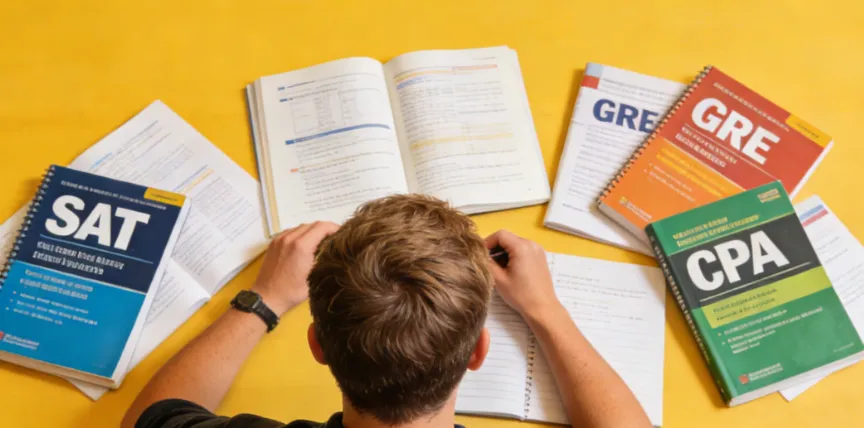
If you’re a student, recent graduate, or professional in Europe or North America, chances are you’ve felt the weight of an upcoming exam hanging over your head. Whether you’re dreaming of getting into your dream university, advancing your career, or qualifying for a high-demand profession, exams like the SAT, GRE, GMAT, IELTS, TOEFL, CPA, Bar Exam, or MCAT stand as critical milestones on your journey. These tests aren’t just about regurgitating facts—they’re about proving your skills, your resilience, and your readiness to take the next step. And let’s be honest: preparing for them can feel overwhelming, lonely, and even discouraging at times. You’re not alone in that struggle. Every year, millions of European and American users search for “exam preparation” advice, desperate for a roadmap that works, a resource that understands their unique challenges, and a way to avoid the common pitfalls that derail so many study plans.
We get it. We’ve seen students stay up until 2 a.m. cramming vocabulary for the SAT, professionals juggling full-time jobs while studying for the CPA, and international students stressing over the IELTS or TOEFL, worried that their language skills will hold them back from their goals. We know that each exam comes with its own set of hurdles, and that one-size-fits-all study tips just don’t cut it. That’s why we’ve created a comprehensive guide to help you navigate the most popular exam preparation journeys—tailored specifically to the needs of European and American users, with insights that resonate with your lifestyle, your goals, and your struggles. And along the way, we’ll share proven, actionable strategies to make your preparation easier, more effective, and ultimately, more successful—so you can ace your exam and move forward with confidence.
Let’s dive in, starting with the exams that shape your academic future, moving to the language tests that open doors globally, and ending with the professional exams that define your career. For each, we’ll break down the unique challenges you’ll face, the common mistakes to avoid, and the proven strategies to succeed—all while sharing insights that will help you stay on track and reach your goals.
Academic Exams: SAT, GRE, GMAT—Your Ticket to Higher Education
For students in Europe and North America, the path to college or graduate school often begins with a high-stakes academic exam. Whether you’re a high school student gearing up for the SAT to get into a top U.S. university, a college senior preparing for the GRE to pursue a master’s degree, or a professional looking to boost your MBA application with a strong GMAT score, these exams are more than just tests—they’re opportunities to showcase your potential. But they’re also notoriously challenging, and many students find themselves stuck in a cycle of studying hard but not seeing results.
The SAT: Beyond “English Good” – Mastering Critical Thinking
If you’re a high school student in the U.S. or Europe applying to American universities, the SAT is likely at the top of your to-do list. But here’s a common misconception: many students (and even parents) think that being good at English is enough to ace the SAT. That couldn’t be further from the truth. The SAT isn’t a language test—it’s a comprehensive assessment of your critical thinking, logical reasoning, and problem-solving skills, designed to measure whether you’re ready for the rigors of college-level learning. Even native English speakers struggle with the SAT because it demands more than just vocabulary and grammar; it requires you to analyze texts, make evidence-based inferences, and apply mathematical concepts to real-world scenarios.
We’ve heard countless students say, “I got straight A’s in English, but my SAT reading score is terrible.” That’s because the SAT’s reading section isn’t about understanding the surface meaning of a passage—it’s about identifying the author’s purpose, analyzing logical relationships, and finding concrete evidence to support your answers. Similarly, the math section isn’t just about memorizing formulas; it’s about modeling problems, using strategic thinking, and avoiding careless mistakes. And the writing and language section? It’s not just about grammar rules—it’s about using language effectively in context, improving clarity, and enhancing the flow of ideas.
The biggest mistake students make when preparing for the SAT is relying solely on practice tests without understanding their mistakes. Cramming vocabulary lists or doing 10 practice tests in a week won’t help if you don’t take the time to analyze why you got a question wrong. Did you misinterpret the question? Did you lack the necessary vocabulary? Or did you simply run out of time? The solution is to create a targeted study plan: focus on your weak areas by reviewing missed questions thoroughly, use official SAT practice materials (the most accurate reflection of the exam), and build a consistent study schedule—even 30-60 minutes a day is more effective than cramming. For vocabulary, focus on high-frequency words used in the SAT and practice using them in sentences, rather than just memorizing definitions. For math, master foundational concepts first, then move to more complex problems, and always show your work to catch careless errors.
GRE & GMAT: Graduate School Success – More Than Just Academic Knowledge
If you’re planning to pursue a master’s or doctoral degree (GRE) or an MBA (GMAT), these exams are critical to your application. Unlike the SAT, which targets high school students, the GRE and GMAT are designed for college graduates, testing your ability to think critically, analyze complex information, and apply what you’ve learned to new situations. For European and American users, the GRE is often the go-to for most graduate programs, while the GMAT is specifically tailored for business school admissions—and both require a strategic approach to preparation.
One of the biggest challenges of the GRE is its verbal reasoning section, which demands a vast vocabulary and the ability to analyze complex texts. Many students spend hours memorizing flashcards but struggle to apply that vocabulary in context. The quantitative reasoning section, meanwhile, tests your ability to solve problems using algebra, geometry, and data analysis—but it’s not just about math skills; it’s about using logical reasoning to find the most efficient solution. The GMAT, on the other hand, focuses more on business-related skills, such as critical reasoning, data sufficiency, and analytical writing—skills that are essential for success in an MBA program.
Another common struggle for European and American users preparing for the GRE or GMAT is balancing study with work or other responsibilities. Many graduate school applicants are working full-time or have family obligations, making it hard to find consistent study time. The key is to prioritize flexibility and efficiency: create a study schedule that fits your routine (e.g., early mornings, lunch breaks, or evenings), break study sessions into 20-30 minute chunks to avoid burnout, and use official practice tests to simulate the real exam experience. For the GRE verbal section, focus on context-based vocabulary learning—read academic articles, essays, and books to see how words are used in real writing. For the GMAT’s data sufficiency section, practice identifying what information is necessary to solve a problem, rather than solving it entirely. And for both exams, practice analytical writing by outlining essays before writing and getting feedback from peers or mentors.
Language Exams: IELTS & TOEFL – Breaking Down Barriers for Global Opportunities
For many European and American users—whether you’re an international student studying in Europe or North America, a professional looking to work abroad, or someone hoping to immigrate—language proficiency exams like the IELTS (International English Language Testing System) and TOEFL (Test of English as a Foreign Language) are essential. These exams measure your ability to read, write, listen, and speak English, and they’re required by universities, employers, and immigration authorities around the world. But preparing for the IELTS or TOEFL can be particularly challenging, even for those who speak English as a second language.
One of the biggest misconceptions about the IELTS and TOEFL is that they’re just “English tests”—but they’re much more than that. They test your ability to use English in real-world situations, whether you’re writing an academic essay, participating in a conversation, or understanding a lecture. For example, the TOEFL’s listening section includes lectures and conversations that mimic real university classes, while the IELTS’s speaking section requires you to engage in a natural conversation with an examiner. Many students struggle because they focus on memorizing vocabulary and grammar rules, rather than practicing their ability to communicate effectively.
We’ve seen countless international students in Europe and North America get stuck on the IELTS or TOEFL, even after months of studying. Common mistakes include: cramming vocabulary without using it in context, practicing with outdated materials, ignoring the speaking and listening sections (which are often the most challenging), and not understanding the scoring criteria. For example, many students think that using complex vocabulary will get them a higher score, but in reality, the IELTS and TOEFL reward clarity, coherence, and accuracy—not just fancy words. Similarly, many students practice speaking by themselves, but without feedback, they don’t realize they’re making pronunciation or grammar mistakes that are holding them back.
To prepare effectively for the IELTS or TOEFL, focus on real-world practice: watch English-language movies, TV shows, and lectures (with subtitles at first, then without) to improve listening skills; read academic articles, news articles, and blogs to build reading comprehension; practice speaking with native English speakers (through language exchange programs, online communities, or local meetups) to improve fluency and pronunciation; and write regularly—essays, emails, or journal entries—and ask for feedback from native speakers or language teachers. Use official IELTS and TOEFL practice materials to familiarize yourself with the exam format, and take timed practice tests to build stamina. For the speaking section, practice answering common questions naturally, without memorizing scripts, and focus on organizing your thoughts clearly. For writing, learn the structure of academic essays (introduction, body paragraphs, conclusion) and practice linking ideas coherently.
Whether you’re taking the IELTS Academic for university admission, the TOEFL iBT for study abroad, or the IELTS General Training for immigration, tailoring your preparation to your specific goals is key. Focus on the skills that are most relevant to your exam (e.g., academic writing for IELTS Academic, everyday conversation for IELTS General Training) and track your progress to identify areas that need more work.
Professional Exams: CPA, Bar Exam, MCAT – Your Path to a High-Demand Career
For many European and American users, the next step after college or graduate school is pursuing a professional career—and that often means passing a high-stakes professional exam. Exams like the CPA (Certified Public Accountant), Bar Exam, and MCAT (Medical College Admission Test) are among the most challenging exams you’ll ever take, but they’re also the key to unlocking some of the most rewarding careers in finance, law, and medicine. These exams require months of rigorous study, intense focus, and a strategic approach—and the stakes couldn’t be higher: passing means opening the door to a high-paying, stable career; failing means delaying your goals and potentially wasting months of hard work.
CPA Exam: The Toughest Professional License – Navigating Complexity and Pressure
If you’re pursuing a career in accounting or finance, the CPA Exam is the gold standard. It’s widely considered one of the most challenging professional exams—with a first-time pass rate of just 14-20%, lower than the Bar Exam and even some medical board exams. The CPA Exam consists of four core sections: Financial Accounting and Reporting (FAR), Auditing and Attestation (AUD), Regulation (REG), and a discipline section of your choice. Each section tests your knowledge of accounting principles, business law, tax regulations, and ethical standards—and requires you to apply that knowledge to real-world scenarios.
The biggest challenge of the CPA Exam is its complexity and the sheer volume of material you need to master. Many candidates are working full-time while studying, making it hard to find the time to cover all the content. Additionally, the exam is computerized and adaptive, meaning that the difficulty of the questions adjusts based on your performance—so if you’re doing well, the questions get harder, and if you’re struggling, they get easier. This can be stressful, as it’s easy to second-guess yourself during the exam.
Another common mistake CPA candidates make is not using the right study materials. Many rely on outdated textbooks or generic study guides, which don’t cover the latest exam changes or focus on the most high-yield topics. To succeed, focus on official CPA exam materials and reputable study guides that are updated annually to reflect the latest content and format. Break each section into manageable chunks—focus on one topic at a time, master it, then move on. Create a study schedule that allocates enough time to each section (FAR is typically the most time-consuming), and take regular practice tests to simulate the adaptive format. Join study groups with other CPA candidates to share notes, discuss difficult topics, and stay motivated. And don’t forget to prioritize self-care—burnout is a common pitfall, so make time for rest, exercise, and hobbies to keep your mind sharp.
Bar Exam: The Gateway to a Legal Career – Mastering Law and Strategy
For aspiring lawyers in Europe and North America, the Bar Exam is the final hurdle between law school and practicing law. The exam varies by country and state, but it typically consists of two parts: a multiple-choice section (such as the Multistate Bar Examination in the U.S.) and an essay section that tests your ability to apply legal principles to hypothetical cases. The Bar Exam is notoriously difficult—with pass rates varying by jurisdiction, but often hovering around 50-60% for first-time takers. It requires you to memorize vast amounts of legal information, understand complex legal concepts, and write clearly and persuasively under pressure.
One of the biggest challenges of the Bar Exam is balancing memorization with application. Many law school graduates spend months memorizing legal rules but struggle to apply them to the essay questions, which require you to analyze a case, identify the relevant legal issues, and argue your position effectively. Additionally, the exam is timed, so you need to be able to work quickly and efficiently—something that many candidates struggle with.
To prepare for the Bar Exam, focus on active learning rather than passive memorization: create flashcards for key legal rules, but also practice applying those rules to hypothetical cases. Use official Bar Exam practice questions and essays, and review sample answers to understand what examiners are looking for. Develop a system for organizing legal information (e.g., outlines, flowcharts) to make it easier to recall during the exam. Practice writing essays under timed conditions to improve your speed and clarity, and ask for feedback from law professors or fellow Bar candidates. For the multiple-choice section, focus on understanding the reasoning behind each answer, not just memorizing the correct choice. And create a study schedule that allows you to review all key topics multiple times before exam day—consistency is key.
MCAT: Medical School Admission – A Test of Science and Critical Thinking
If you’re aspiring to become a doctor, the MCAT is the most important exam of your academic career. The MCAT (Medical College Admission Test) is required for admission to medical schools in the U.S. and many other countries, and it tests your knowledge of biology, chemistry, physics, psychology, and sociology—along with your critical thinking and problem-solving skills. The exam is 7.5 hours long, making it one of the longest and most mentally draining exams you’ll ever take, and it requires months of dedicated study (typically 3-6 months) to prepare effectively.
One of the biggest challenges of the MCAT is its breadth of content. The exam covers everything from cell biology to organic chemistry to social psychology, and you need to have a deep understanding of each topic. Additionally, the MCAT is not just a test of knowledge—it’s a test of your ability to apply that knowledge to new situations. For example, you might be asked to analyze a scientific experiment, interpret data, or evaluate a hypothesis—skills that are essential for success in medical school and beyond.
Many pre-med students struggle with the MCAT because they try to memorize too much information without understanding the underlying concepts. This approach leads to burnout and poor performance on the exam. To succeed, focus on building a strong foundation of knowledge: master the core concepts of each subject before moving to more complex topics. Use official MCAT practice materials and reputable study guides to ensure you’re covering all relevant content. Practice applying your knowledge to passage-based questions, as the MCAT heavily focuses on critical thinking and data interpretation. Create a study schedule that allocates enough time to each subject, and take full-length practice tests regularly to build stamina and identify weak areas. Join a study group with other pre-med students to discuss difficult concepts and stay motivated, and don’t forget to take breaks to avoid burnout—your mental and physical health are just as important as your study time.
Key Strategies for Acing Any Exam – No Special Resources Required
Preparing for any of these exams is a journey—one that’s filled with challenges, setbacks, and moments of self-doubt. But you don’t have to rely on specialized resources to succeed. The most effective exam preparation strategies are simple, actionable, and accessible to everyone. Here are the core principles that will help you ace any exam, regardless of which one you’re taking:
Tailor Your Approach to Your Unique Needs
Every student and professional has a different learning style, schedule, and set of strengths and weaknesses. What works for one person won’t work for everyone. Take the time to identify your weak areas (through practice tests or self-assessment), and focus your study time on those areas. If you’re a visual learner, use diagrams and flowcharts to organize information; if you’re an auditory learner, record yourself reciting key concepts and listen to them regularly. Adjust your study schedule to fit your lifestyle—if you’re most productive in the morning, study then; if you work better in the evening, allocate time then. The goal is to create a plan that works for you, not against you.
Focus on Quality Over Quantity
It’s not about how many hours you study—it’s about how effective those hours are. Cramming for 8 hours straight is less effective than studying for 2 hours a day with full focus. Take regular breaks (every 20-30 minutes) to avoid burnout, and review what you’ve learned at the end of each study session to reinforce your memory. When practicing with sample questions, take the time to analyze your mistakes—understand why you got a question wrong, and what you can do to avoid making the same mistake again. This active review is far more effective than mindlessly doing hundreds of practice questions.
Use Official Practice Materials
The best way to prepare for an exam is to practice with materials that are as close to the real exam as possible. Official practice tests and study guides are created by the same organizations that administer the exams, so they’re the most accurate reflection of the exam format, difficulty, and content. Avoid outdated or generic materials—they can lead you astray and waste your study time. Most exam administrators (such as the College Board for the SAT, ETS for the GRE and TOEFL, and AAMC for the MCAT) offer free or low-cost official practice materials, making them accessible to everyone.
Build a Support System
Preparing for a high-stakes exam can be lonely, but it doesn’t have to be. Join study groups with other people who are preparing for the same exam—you can share notes, discuss difficult topics, and hold each other accountable. Reach out to mentors, teachers, or professionals who have already passed the exam—they can offer valuable insights and advice. And don’t forget to lean on your friends and family for support—they can help you stay motivated and remind you of your goals when you’re feeling discouraged.
Prioritize Self-Care
Burnout is one of the biggest obstacles to exam success. No matter how busy your study schedule is, make time for rest, exercise, and hobbies. Get enough sleep (7-8 hours a night)—sleep is crucial for memory retention and cognitive function. Eat a healthy diet and stay hydrated to keep your brain sharp. Take time to do things you enjoy—whether it’s reading a book, going for a walk, or spending time with friends. Remember: you can’t perform your best if you’re physically or mentally exhausted. Taking care of yourself isn’t a waste of time—it’s an essential part of your exam preparation.
Start Your Exam Preparation Journey Today
Preparing for an exam like the SAT, GRE, IELTS, CPA, Bar Exam, or MCAT is no easy task—but it’s worth it. These exams are the key to unlocking your potential, whether you’re pursuing higher education, advancing your career, or starting a new chapter in your life. And you don’t need specialized resources to succeed—just dedication, a strategic plan, and the willingness to keep going, even when things get tough.
Here’s how to get started:
- Choose your exam: Identify the exam you need to take and familiarize yourself with its format, content, and scoring criteria using official resources.
- Assess your current level: Take a free official practice test to identify your weak areas and set realistic goals for improvement.
- Create a study plan: Break down the exam content into manageable chunks, allocate time to each area, and set a schedule that fits your lifestyle.
- Practice consistently: Use official practice materials, focus on active review, and track your progress to stay on track.
- Build your support system: Join study groups, reach out to mentors, and lean on friends and family for support.
Remember: Every successful exam taker started where you are now—with a goal, a plan, and a willingness to work hard. You have everything you need to succeed, and with the right strategies, you can ace your exam and achieve your dreams. Don’t wait—start your exam preparation journey today, and take the first step toward the future you want.
We’re here to share the insights and strategies you need to succeed. Let’s ace your exam together.
Leave a Reply